Computers Used to Be Fun
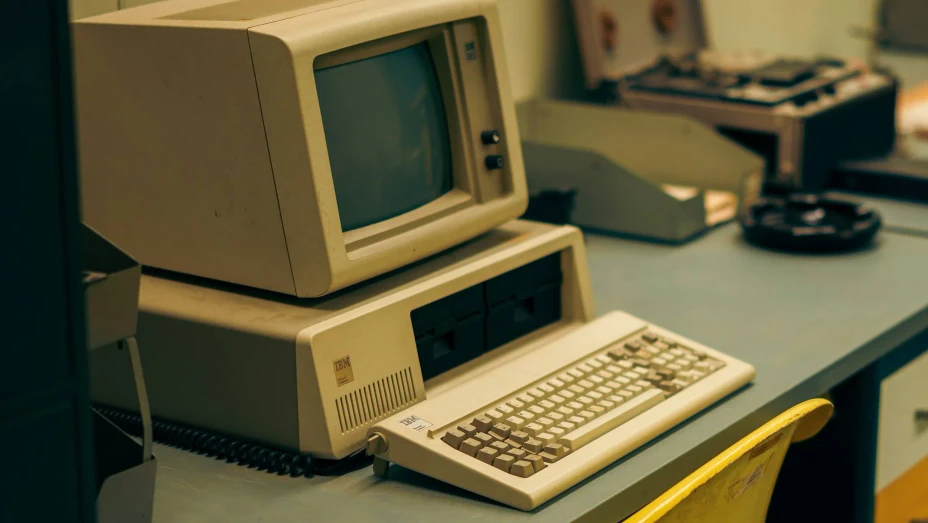
I was maybe ten when my parents set up a computer in the corner of my bedroom, right next to my Green Day poster. A big white plastic tower with a CD-ROM drive, a bulky CRT monitor, and a clunky keyboard. It had a big bouncy button I had to press to bring the whole thing to life, and get the Windows XP wallpaper to stare back at me. It became my safe space for most of my teenage years.
I still remember installing eMule. I used it to download MP3s of my favorite singles and movies I could watch with my parents. Of course, I got a few viruses, and some movies weren’t exactly what I expected them to be.
Eventually I got my hands on a sketchy copy of Photoshop CS4, with a gnome grinning on the crack loader, 8-bit music chiptuning away. That’s how I started making comics. I’d ink my drawings on paper, scan them, and send them to a friend to get them cleaned up and colored properly. We would watch tutorials for hours. I learned English for the sole purpose of unlocking secret Photoshop knowledge.
We ended up making pretty good comics. Naturally, I wanted to show them off. Back in the day, if you wanted to share something with the world, you’d start a personal blog. So I opened my very own Blogspot site. I figured out pretty quickly you could add some interactivity to the site, so I drew different versions of my buttons, and they’d animate when you hovered over them. It felt like magic to me.
After about a year, Blogspot wasn’t cutting it anymore. I needed something bigger. Something better. It became pretty clear that the only match for my larger-than-life destiny was WordPress. There, I could add more effects, tweak themes, and post on PHP forums where I didn’t understand a word anyone was saying. I even added analytics, so I could see how much traffic I’d get every day.
Unfortunately, life happened, and I lost sight of my special friend. I read a lot of books and mostly stayed offline. I got into art more seriously. Went to university and dropped out. After that, I worked in kitchens. I even had my own food truck for some time.
But then COVID happened. I’d rather forget most of that period, but picking up a computer again is a memory I cherish. I wasn’t sure what to do or where to go. So I did what I knew and tinkered with WordPress. One thing led to another, and before I knew it, I registered on Upwork, cleaning up themes for $10 an hour.
I thought it’d stay a hobby, but my girlfriend (now wife!) pushed me. I took up more ambitious contracts after building up my profile. Made custom plugins and learned OOP in PHP. Laravel came next. I contributed to OSS. What was a side project became my only source of income, and I was loving every single second of it.
I now work as a full-stack developer. I have serious clients. I handle deadlines and product requirements. For me, code is only a means to an end. I’ve written thousands of controllers, POST and GET requests, in more languages than I ever thought I’d know. I can tell you about containers, JIT compilers and JS runtimes.
I’ve used my fair share of different frameworks, and they don’t really do anything for me anymore. There are only a few ways to send data between a server and a client. A new syntax for doing the same thing ever so slightly differently isn’t something that excites me. I still enjoy what I do, but the passion has slowly left me.
With the rise of AI tools, that feeling has only intensified. I found out I wasn’t the only one disappointed with where software engineering is heading. Many miss writing code and losing themselves for hours in a hard problem. It’s as if making software has moved from creating to merely using: user of a framework, user of a cloud, user of an agent.
The unfortunate reality is that the web I build for feels largely finished, in the same sense the railway is. Trains can only get so much better. You can add comfortable seats, air conditioning and Wi-Fi, but in the end they’ll still do what a train does: take you from point A to point B. Even AI, for all the noise, mostly runs on rails the internet laid down years ago.
But somewhere along the road, I think I confused the tracks running out with the fun being over. What made me fall in love at ten was never the frontier of the technology. It was the freedom computers gave me: to make comics from nothing, to talk to strangers across the world, to build something no one asked for.
These days, I’m learning Rust. I’m working through the Rust Book, and honestly having a lot of fun with it, especially coming from the web. One passage in the foreword caught my eye:
But what makes Rust truly special is its roots in empowering you, the user, to achieve your goals. This is a language that wants you to succeed, and the principle of empowerment runs through the core of the community that builds, maintains, and advocates for this language.
It reminded me of the feeling I had the first time I used the plasticky, noisy behemoth my parents installed in my room years ago. Being a user back then wasn’t about anyone’s financial incentive. As the book puts it, it was about empowerment. Going through Rust’s resources, I can see the care poured into making the language accessible. And even after all these years, I’m still amazed that most of it is free.
It’s also showing me how much I don’t know yet. Being self-taught, I get to discover memory management, data structures and algorithms. Things I’d never have run into had I stayed in PHP/TS land. I might not be writing Rust in the near future, but it made me love computers again, and for that I’m really grateful.
The internet I grew up on was a scrappy, amateur place, with personal blogs, forums full of strangers, whatever you could cobble together yourself. It’s hardening now, settling around a handful of enormous players.
But open code and open resources are still out there, allowing you to build what you want, learn what you like, for almost nothing. That part was never really about the technology.
Computers didn’t stop being fun. I just forgot how to look at them.
While observability has always been essential, it is now a lever for producing better code faster. Sentry picks the wound, Opus writes the stitches, and a human decides every morning whether to merge them.
10 min readHow we built an isolated, observable habitat for coding agents at AnchorLess: git worktrees, per-workspace containers, Traefik routing, and a staging environment agents can debug on their own.
6 min read